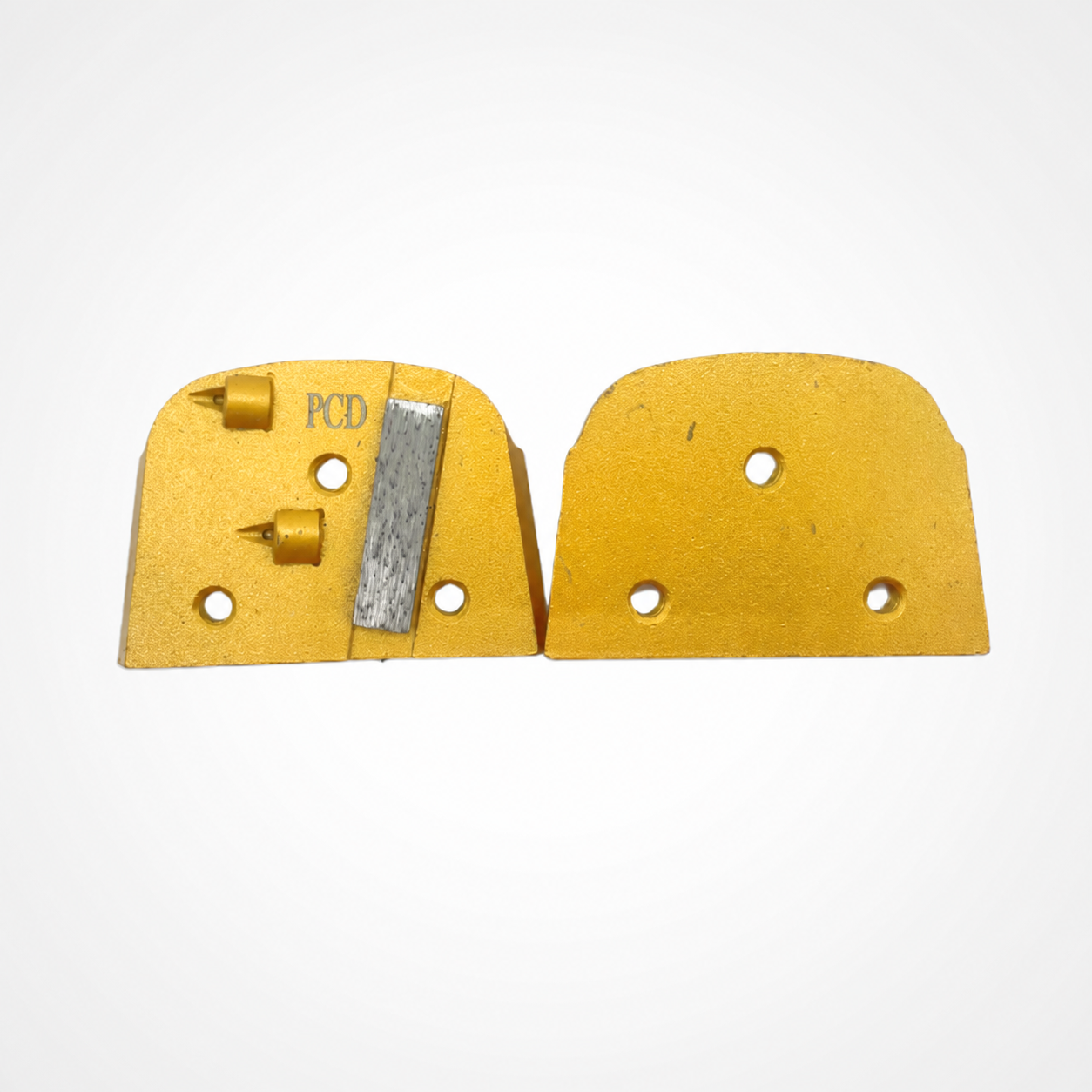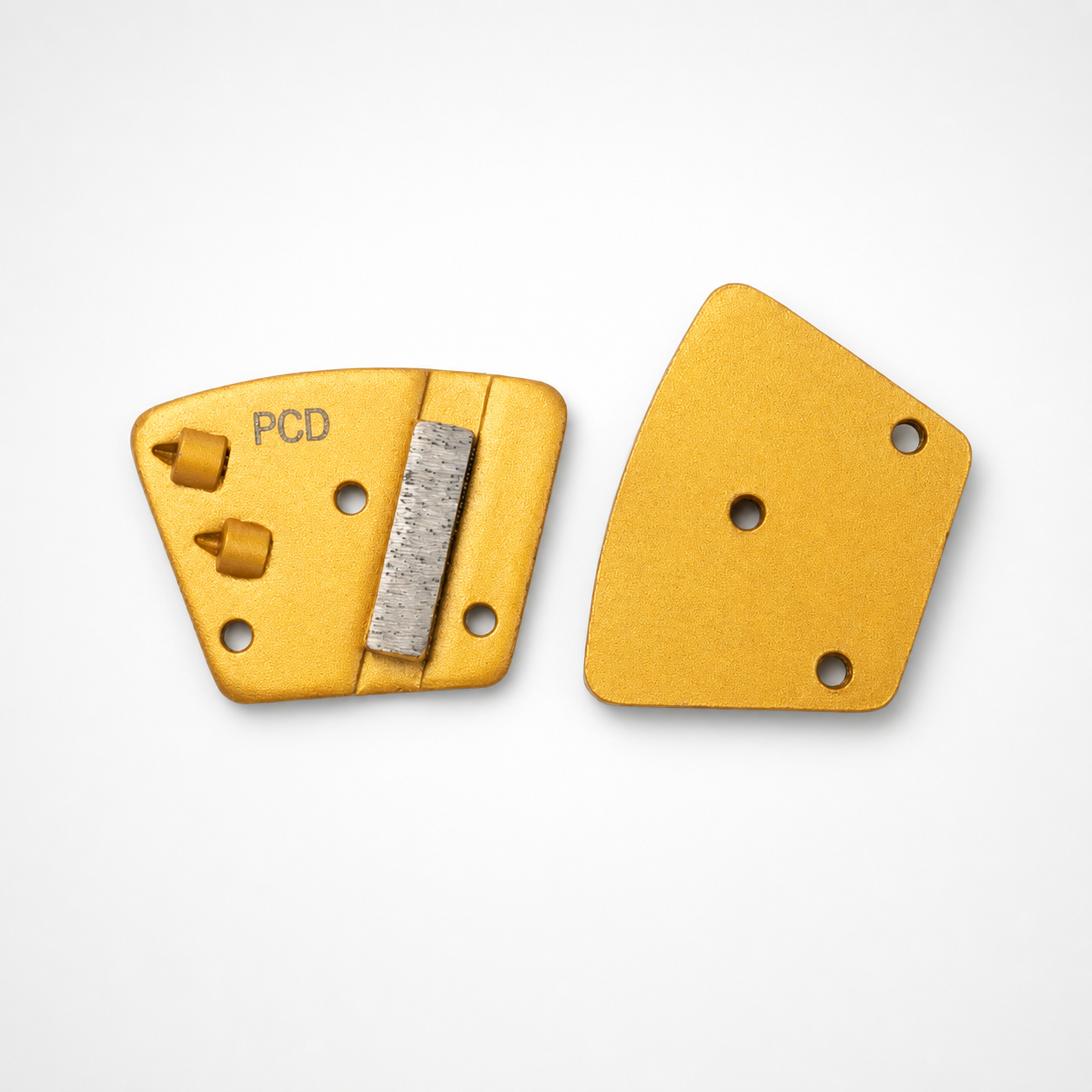
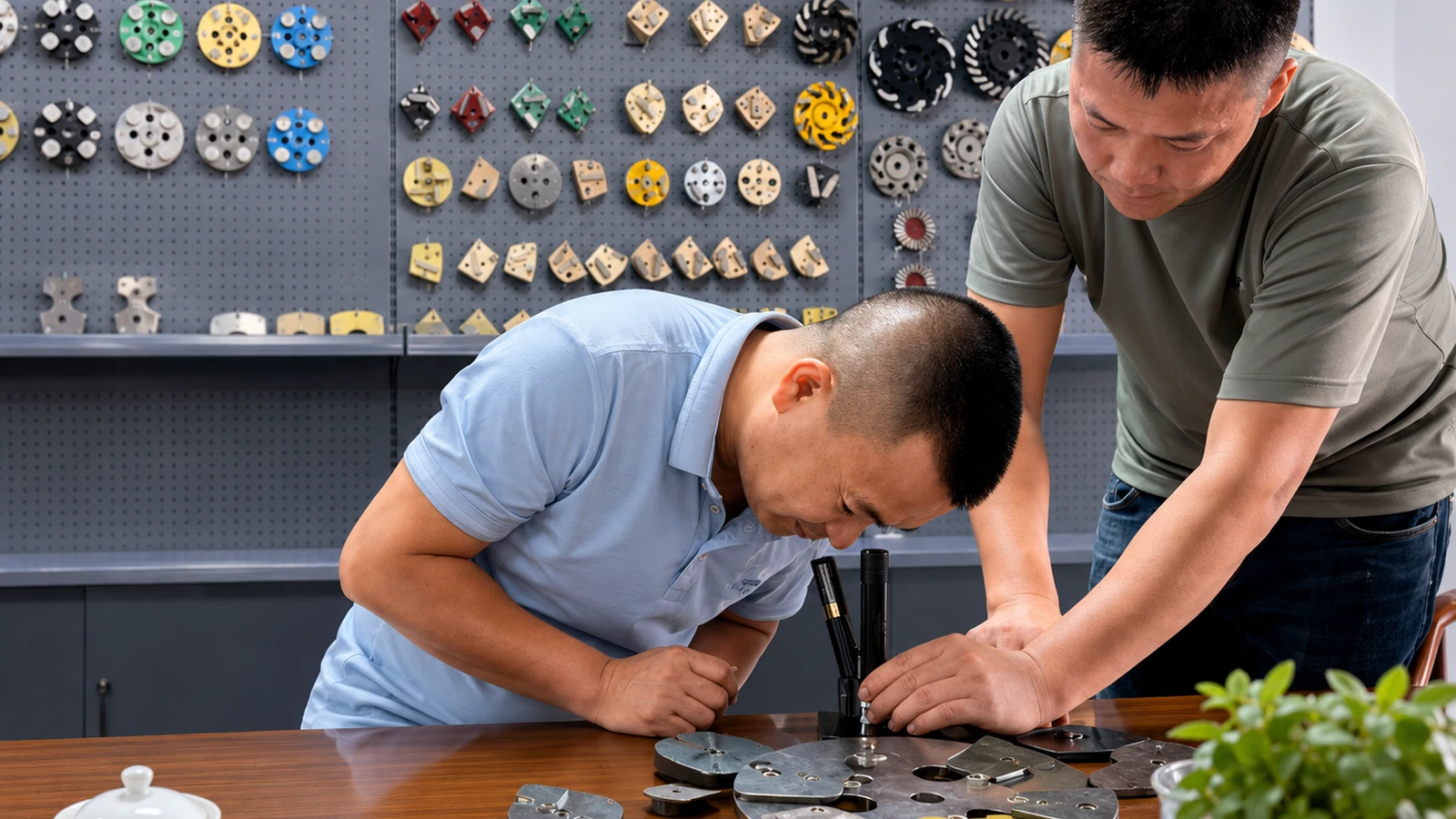
To select a PCD coating removal tool, define the coating or adhesive, approximate thickness, bond and brittleness, substrate condition, machine and mount, removal target, and acceptable surface profile.
PCD tooling is generally considered for aggressive removal rather than routine concrete polishing. The correct starting configuration depends on whether the material peels, smears, fractures, or loads conventional abrasives.
What This Guide Covers
- Describe the Coating Before Choosing the Tool
- Review PCD Configuration and Machine Fit
- Use a Controlled Trial Area
- Plan the Handoff to Metal Grinding
Describe the Coating Before Choosing the Tool
Provide the coating type when known, approximate thickness, number of layers, visible failures, contamination, and whether the material softens with heat. Photographs and a small removed sample can help distinguish a brittle film from a gummy adhesive.
If the coating is unknown, avoid presenting a guessed chemistry as fact. Describe observable behavior and plan a trial area.
Review PCD Configuration and Machine Fit
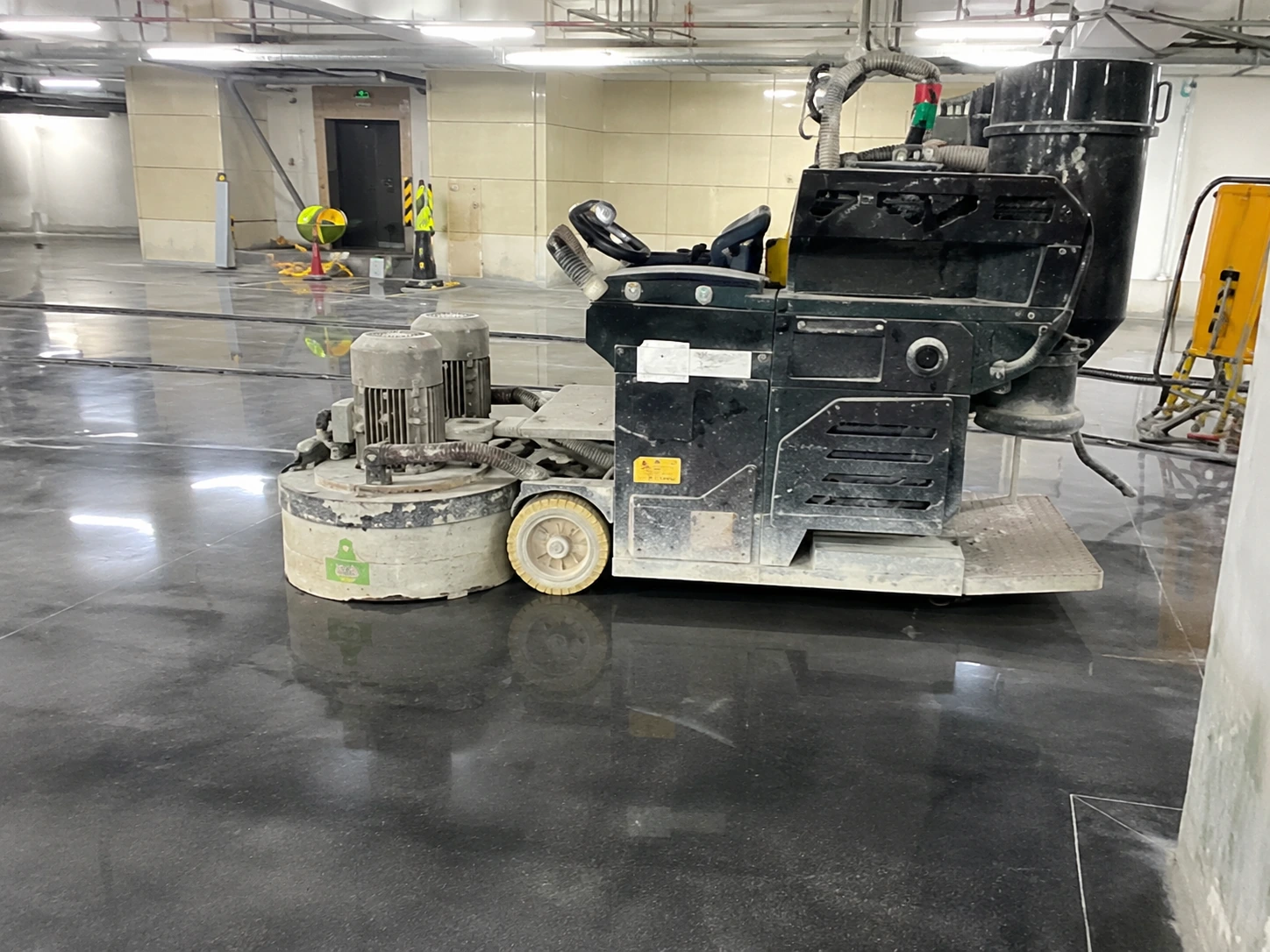
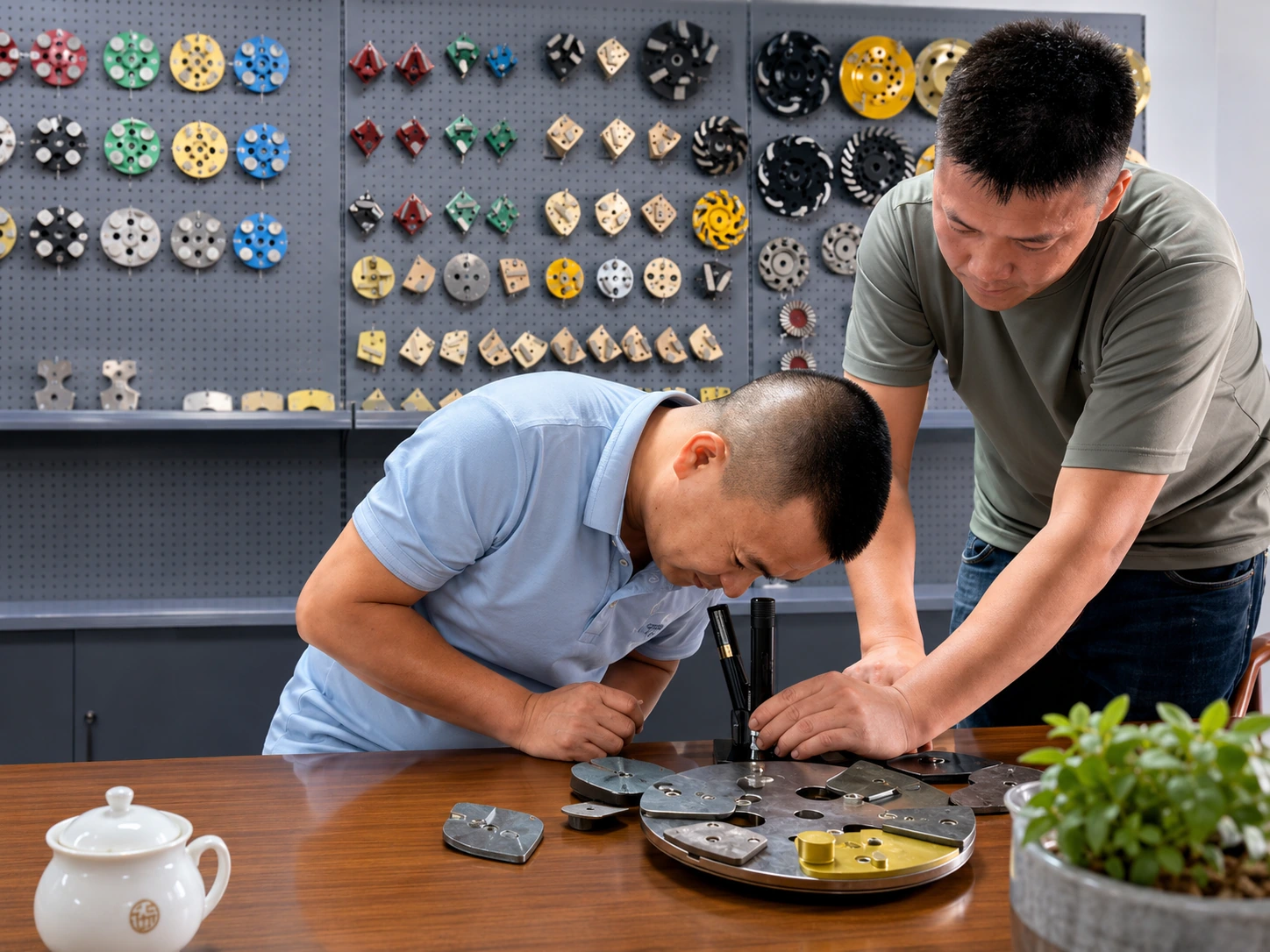
Confirm machine model, mount, rotation, tool count, and clearance. PCD piece count, orientation, protective segments, and support geometry may change removal behavior and the surface left behind.
| Variable | Why buyers should record it |
|---|---|
| Coating behavior | Helps separate scraping from abrasive grinding needs |
| PCD arrangement | Influences aggressiveness and contact pattern |
| Machine setup | Affects load, direction, and stability |
| Next process | Defines how much follow-up grinding may be required |
Use a Controlled Trial Area
Test in a representative area and record production behavior, loading, heat, vibration, coating removal, substrate damage, and the follow-up step needed. Stop if the attachment, machine behavior, or jobsite conditions are unsafe.
Concrete grinding can create respirable silica after the coating is breached. Review the machine instructions and applicable OSHA silica controls for the task.
Plan the Handoff to Metal Grinding
PCD removal may leave a surface that requires a metal-bond grinding step before polishing or coating. Define the acceptable remaining material and target profile so the removal and refinement tools are selected as one process.
Compare formats in the PCD coating removal collection.
Buyer FAQ
Will PCD remove every coating?
No single configuration is suitable for every coating. Material behavior, thickness, bond, machine, and trial results matter.
Can PCD tools grind bare concrete?
They are typically selected for aggressive coating removal; confirm the intended transition once bare concrete is exposed.
Why use protective segments?
Depending on the design, support or protective segments may influence contact and reduce direct PCD impact. Confirm the exact configuration.
Do I need left- and right-hand versions?
Rotation and segment orientation may require direction-specific tooling. Confirm the machine and holder.
How large should the trial area be?
Use a representative area large enough to observe removal and machine behavior while keeping the test controlled.
Prepare a Useful Project Request
Send coating photos, known material information, approximate thickness, machine and mount, rotation, floor condition, desired next step, quantity, and destination.
For a focused review, submit the product type, floor material or coating, machine model and mounting system, required dimensions, application environment, customization needs, estimated quantity, packaging requirements, destination country, and requested delivery window through our inquiry page.