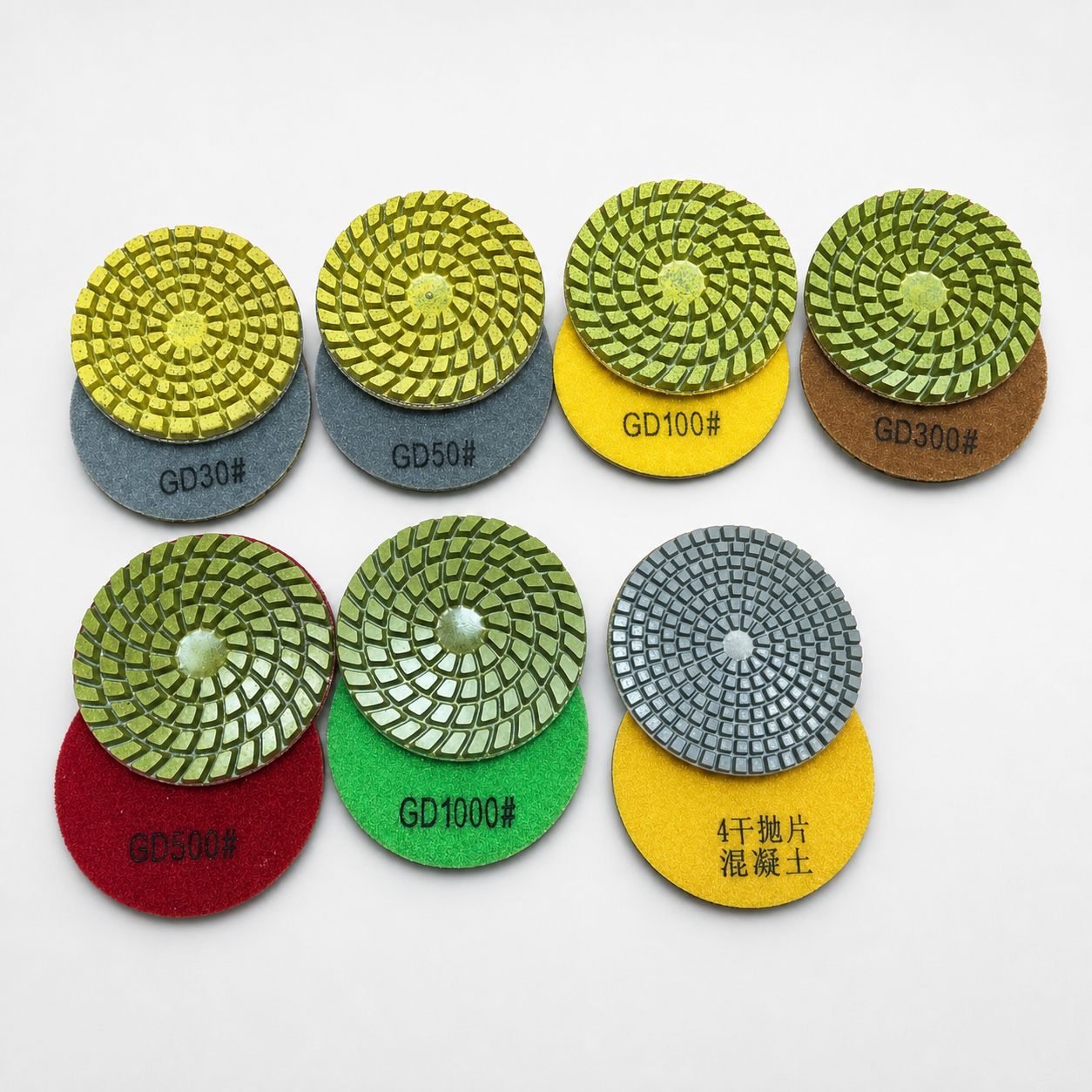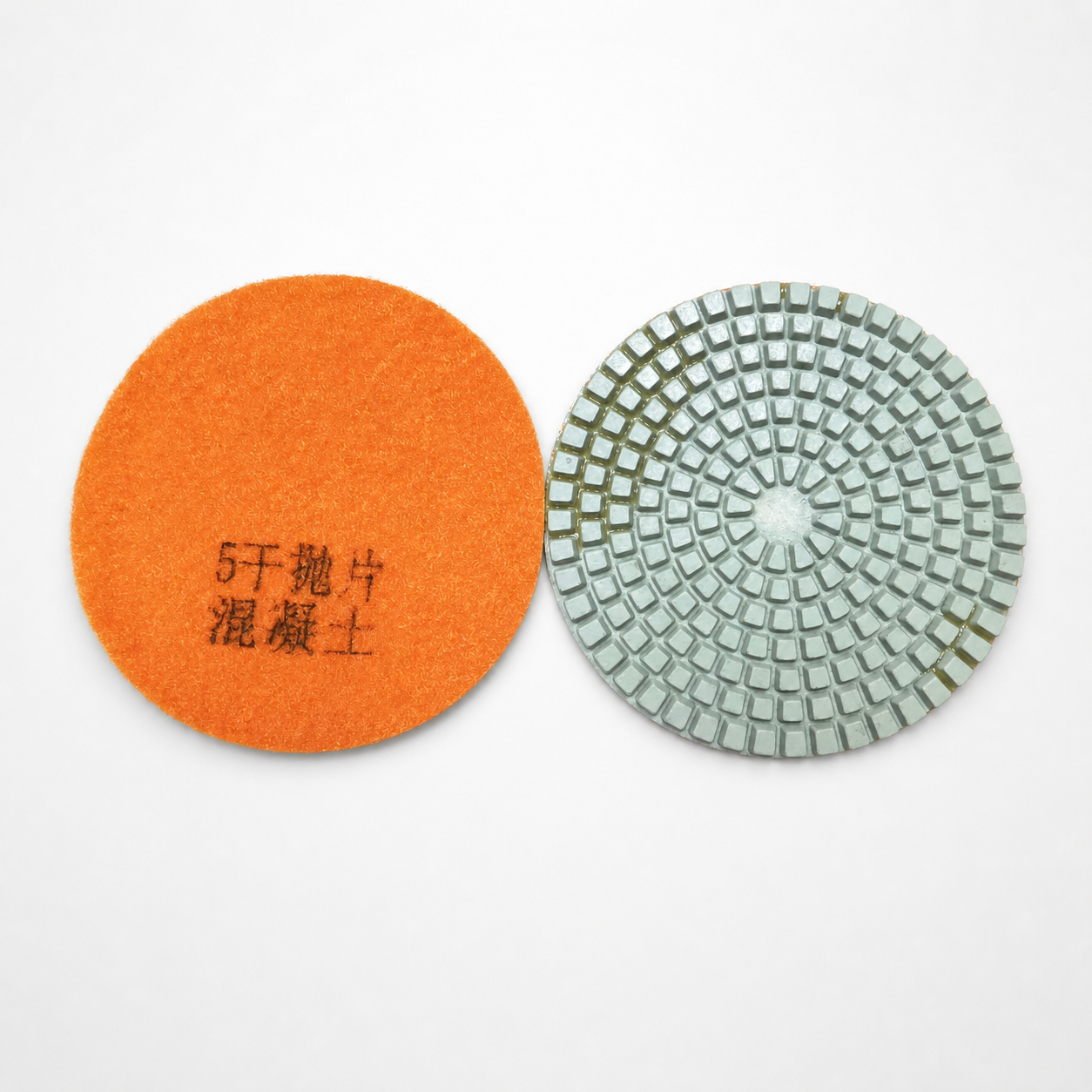
A coherent resin polishing pad program matches pad construction, diameter, attachment, grit sequence, operating method, and identification to a defined polishing workflow.
Adding many similar pads without a clear process can confuse sales teams and contractors. A tighter program makes it easier to explain where each pad starts, what precedes it, and what result the next step is intended to refine.
What This Guide Covers
- Define the Process Before the SKU List
- Build a Clear Range Architecture
- Collect Field Feedback That Can Be Compared
- Keep Branding and Identification Practical
Define the Process Before the SKU List
Identify whether the pads are intended for wet or dry use, the surface, machine type, expected starting condition, and target finish. Define the transition from metal or hybrid steps so the resin sequence is not asked to remove scratches outside its intended role.
Review the current resin polishing pad range, including separate wet and dry polishing pad groups.
Build a Clear Range Architecture
Organize the range by use method, diameter, thickness or construction, attachment, and grit. Give each configuration a distinct item code that appears on the pad, inner pack, carton, and sales sheet.
| Decision | Buyer question |
|---|---|
| Wet or dry | What site controls and finish process will be used? |
| Diameter and attachment | Which machines or hand tools must accept the pad? |
| Grit sequence | Where does the resin stage begin and end? |
| Pack format | How will distributors count, display, and replenish stock? |
Collect Field Feedback That Can Be Compared
Ask users to record the substrate, previous grit, machine, speed setting, wet or dry method, area completed, observed cut, scratch removal, finish, and pad condition. A comment such as “too slow” is not actionable without the operating context.
Keep separate records for different concrete conditions. A result from one slab should not be presented as a universal performance claim.
Keep Branding and Identification Practical
Color, logo, label, and package design may be customized subject to review. Written grit and item identification should remain legible after normal handling.
Approve a physical or digital artwork proof before production and keep the final revision with the purchase order.

Buyer FAQ
Can wet and dry pads use the same sequence?
They may use similar grit labels, but construction and process behavior differ. Confirm the intended method and sequence.
What diameter should a distributor stock?
Choose diameters based on the machines and hand tools used by the target customers.
Can packaging be private labeled?
Submit artwork, label dimensions, pack count, and carton requirements for feasibility review.
Should every project start at the same grit?
No. The starting step depends on the existing surface and the scratches left by the previous process.
How should complaints be documented?
Record item code, lot reference if available, machine, surface, process steps, operating method, and clear photos.
Prepare a Useful Project Request
Provide target user, machine type, wet or dry method, diameter, attachment, planned sequence, annual quantity estimate, branding, pack count, and destination.
For a focused review, submit the product type, floor material or coating, machine model and mounting system, required dimensions, application environment, customization needs, estimated quantity, packaging requirements, destination country, and requested delivery window through our inquiry page.